Last Update On November 24, 2011
Tough Cuff: Bullet-proof Your Rotators for Pain-free Power
by Bill Starr
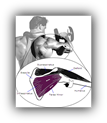
Rotator cuff problems are a rather recent occurrence in strength training and bodybuilding. They've come about for several reasons: doing far too much upper-body work without corresponding effort for the upper back, overworking the bench press, using sloppy form on the bench press and performing behind-the-neck exercises.
The single biggest culprit is the bench press, or, rather, the overemphasis of it and the use of poor benching technique. I've come to that conclusion because trainees who don't include flat-bench presses in their routines don't have rotator cuff problems; for example, Olympic weightlifters and trainees who prefer the incline over the flat-bench press. Until the early 1970s, when the bench replaced overhead, or military, presses as the primary upper-body exercise, rotator cuff problems were unheard of. Back then, if trainees used the bench press, they regarded it as an auxiliary exercise, while they did overhead presses at nearly every workout. That made the muscles of the rotator cuff stronger, since overhead pressing works them directly. Once the trend shifted to flat-bench presses, rotator cuff injuries started cropping up'some small, some major.
I should mention that the bench press is not the villain per se. When you use proper technique and don't overwork it but, rather, do it in a sensible manner in your weekly routine, it's a very beneficial exercise in bodybuilding and strength training. In most cases the problem is caused by sloppy form: Since many trainees believe that this is the only lift that matters, anything goes. That means rebounding the bar forcefully off your chest, bridging, twisting, squirming and many other maneuvers that resemble gymnastic feats.
Another major cause of rotator cuff damage is behind-the-neck exercises. That's especially true for younger trainees and those who haven't yet established a solid strength foundation. The shoulder girdle simply isn't designed to move in that direction, and when you add resistance, the situation becomes more risky. Behind-the-neck presses, chins and pulldowns all place your rotator cuffs in jeopardy. I've been harping on that fact for years, but the message hasn't gotten across to many. All of those exercises are just as productive when performed to the front and not at all risky, so why tempt the gods? It's a gamble you're not going to win.
One of the problems with behind-the-neck exercises is that when you do feel the pain in your rotator cuff, it's too late. Now, if you combine sloppy form on the bench with one or more behind-the-neck movements, you're heading down the unhappy road to a rotator cuff injury'where recovery is not always swift and you could require surgery.
If you look through an anatomy book, chances are you won't find a section on the rotator cuff. What exactly is it, and where is it located? That's useful information, since many people who tell me that they think they have rotator problems really don't. Their injuries are higher up, in the shoulder joint itself. In most cases the exercises I recommend also help with shoulder problems, unless they're severe. Then it's time to seek medical help.
Next >>
Injuries to the rotator cuff have risen significantly over the past few decades. Nowadays it seems that everyone who's trained seriously for more than half a dozen years suffers from some degree of rotator cuff problems or has pain in the shoulder itself. The severity ranges from nagging aches during the night to sharp pains that prevent you from doing any physical activity that involves your arm.


