Last Update On January 15, 2012
Smith Machine Overhead Press And Shoulder Pain
by Vladi
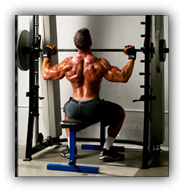
Quite often I will see guys in the gym imitating Dorian Yates and performing seated overhead presses on the smith machine. However the fact that an IFBB bodybuilder does it this way does not mean that it's the best way to do things.
The shoulder joint is the joint with the biggest range of motion in the whole body. At the same time a smith machine takes the stabilization part of the exercise and while it may hit your front deltoids nice the stabilizers also known as the famous rotator cuff won't be able to catch up with the increased strength of the deltoids. Unless you do additional work problems will occur.
I think that number one reason why people use the smith machine in this case is ego. The overhead press does not allow you to lift a lot of weight. I've seen a guy in the gym who claims 315 bench struggling with 135 lbs on the overhead press. There is just less muscle mass to do the work and by doing the exercise on the smith machine you can use a lot more weight but in this case it doesn't matter. On top of that since the smith machine military press is usually done seated it will most likely cause lower back pain with bigger weights. You can read more on this in the following post:
Seated Military Press And Lower Back Pain
"Bro...than what's the best way to perform the overhead press?"
The “best” way to perform the overhead press is to use either dumbbells or barbells. By using a free weight the shoulder joint will become extremely strong and you won't have to perform those silly rotator cuff exercises with 2 pounds pink weights. (If you wonder if rotator cuff exercises are a must read this article). The shoulder stabilizers are truly tested when you use a free weight for your presses. Also make sure that you completely lockout your elbows at the top of each rep in order to improve flexibility. Don't imitate bodybuilders who don't lockout their shoulder presses. While it keeps the stress on the shoulders it limits the work of the stabilizers and hinders the development of your active flexibility.
You might also like...


